
Custom Electrical Steel Laminations Manufacturer in China
Lammotor is an electrical steel laminations manufacturer in China with 10+ years of experience. We stamp and laser cut silicon steel stator, rotor and segmented laminations, and assemble them into lamination stacks to your drawing. Orders start from a single prototype core, and samples are typically ready in 10 to 15 days, depending on the design and quantity.
Prototype Electrical Steel Laminations
We have the expertise and equipment needed to produce high-quality prototype laminations. We offer two primary methods: laser cutting and wire EDM.
Laser cutting uses a focused laser beam to cut each lamination from the steel sheet. No die is needed, so it handles complex shapes and design changes easily, and it is the fastest way to make prototypes and small batches. See our laser cut laminations.
Wire EDM cuts a clamped stack of laminations with a thin electrode wire. It gives very high accuracy and almost no burr, so it suits prototypes and small batches with tight tolerances, although it is slower than laser cutting.
Silicon Steel Lamination Stacking
For assembling silicon steel laminations, we offer a range of stacking options to suit different requirements. And we ensure that our silicon steel laminations are assembled to the highest standards of quality and efficiency.
Interlocking: small interlock tabs are punched into each lamination in the progressive die, and the layers lock together as they are stamped. It is the fastest and lowest-cost method for volume production.
Bonding: adhesive or self-bonding varnish joins the laminations without tabs or welds. With no short-circuit points between the layers, bonded laminations have lower core loss, noise and vibration.
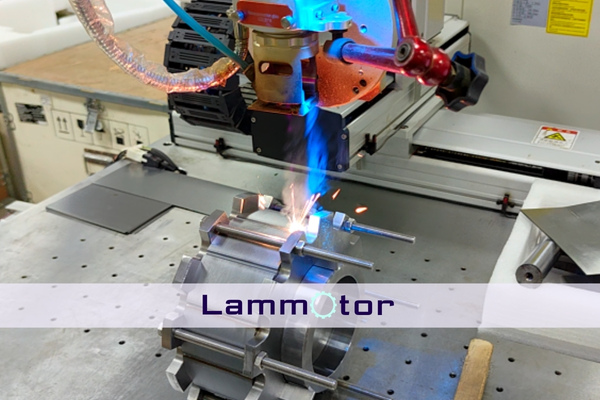
Welding: the stack is joined by laser or TIG welding along the outer diameter. Welded stacks are strong and rigid, but the weld seams connect the laminations electrically and add some local core loss.
Custom Electrical Steel Laminations We Make
As a manufacturer of electric steel laminations, we understand the need for customized products to meet our customers’ specific requirements. Here are some of the product ranges that we offer:
stator laminations
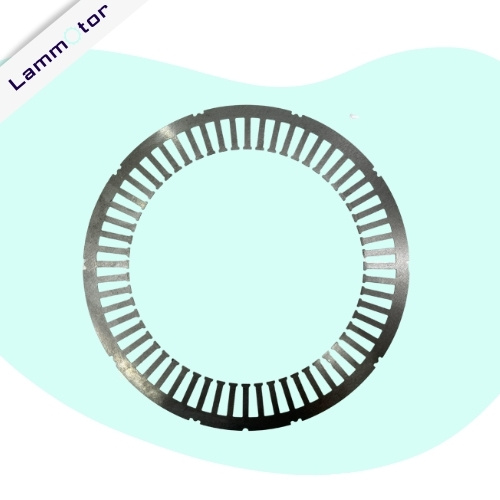
We produce stator laminations that are designed specifically for electric motors, generators, and other electrical equipment. Our stator laminations are available in various shapes and sizes, allowing us to cater to the specific needs of our clients.
rotor laminations
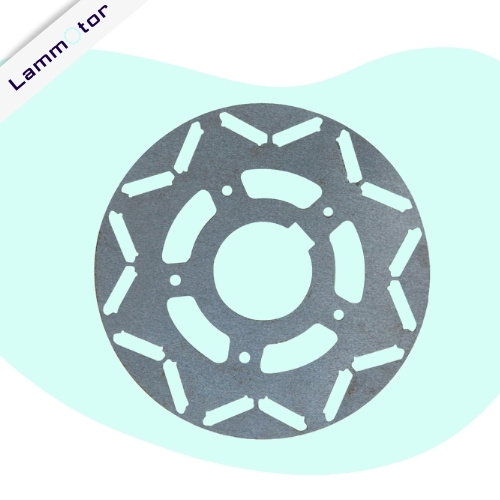
Our rotor laminations are used extensively in electric motors and generators, where they play a crucial role in converting electrical energy into mechanical energy. We can customize rotor laminations to fit the specific needs of our clients.
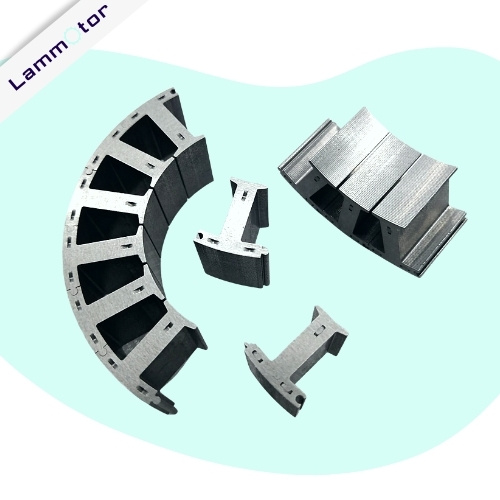
Segmented laminations
Segmented laminations divide the stator into individual teeth or segments. They save electrical steel, allow a higher slot fill with concentrated windings, and are used in large generators and many permanent magnet motors. See our segmented stator laminations.
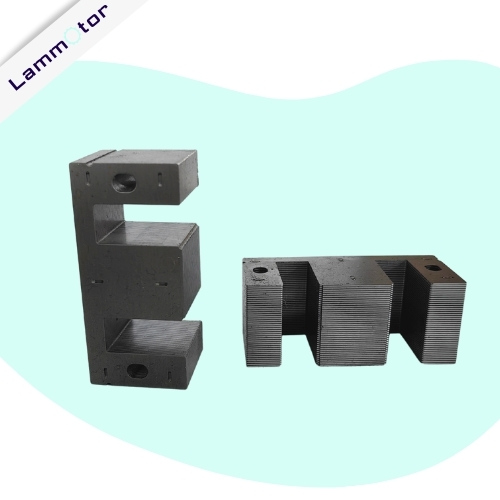
Transformer laminations
We make transformer laminations to customer drawings for power and distribution transformers, reactors and other electrical equipment.
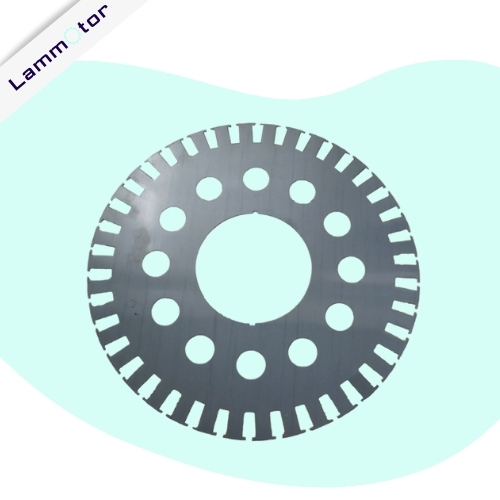
Armature Laminations
Armature laminations are used in the production of electric motors or generators. They are made from thin layers of electrical steel stacked on top of each other. We can customize armature laminations based on our customer’s specific requirements.
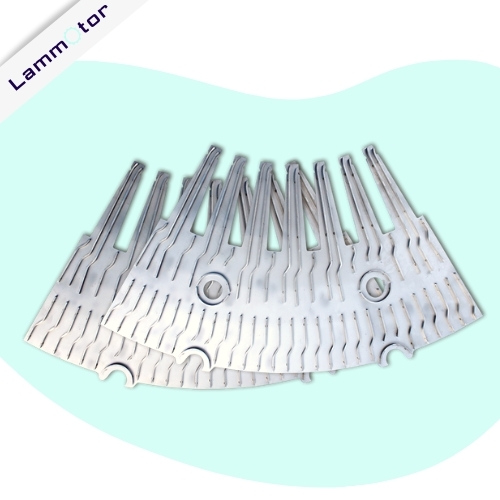
Vent Laminations
Vent laminations are used in electric motors and generators to allow for proper ventilation and cooling of the equipment. We can produce highly customized vent laminations to match our customer’s unique specifications.
Electrical Steel Grades for Motor Laminations
There are two main grades of electrical steel: grain-oriented (GO) and non-oriented (NO).
Non-oriented Electrical Steel
Non-oriented electrical steel has similar magnetic properties in all directions. Because the magnetic flux in a motor or generator rotates, it is used for the stator and rotor laminations of almost all rotating machines.
Grain-Oriented Electrical Steel
Grain-oriented electrical steel has much better magnetic properties along the rolling direction. It is mainly used in transformers, and in motors only for special designs such as segmented stator teeth.
Comprehensive Testing Services
Quality Control for Electrical Steel Laminations
To ensure the quality of electrical steel laminations, we apply several checks throughout the manufacturing process.
We use CMM to accurately measure the dimensions of the laminations and verify their conformity to the design requirements.
We provide inspection reports at various stages of the manufacturing process.
Various tests on the finished laminations, such as core loss testing and magnetic flux density testing.
OUR SERVICES
Why Choose Us as Your Electrical Steel Laminations Manufacturer in China?
With 10+ years of experience and ISO 9001 and IATF 16949 certification, we make electrical steel laminations and stacks to your drawing, from a single prototype to volume production.
Thin Gauge
We can process 0.10 mm ultra-thin silicon steel for high-speed and high-frequency motors, an alternative to amorphous cores where low core loss is needed.
Stamping Capabilities
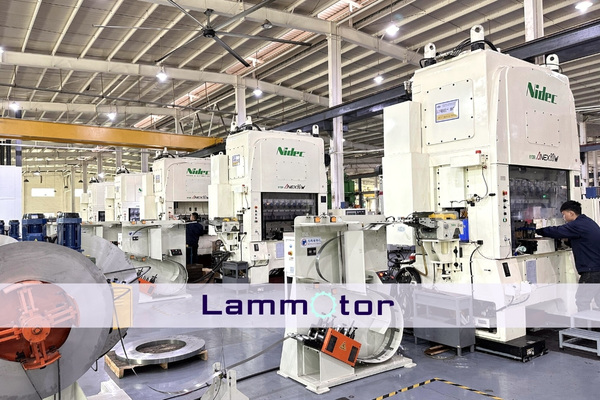
Our stamping capabilities enable us to produce large quantities of laminations quickly and efficiently.
Laminations Design
We have highly skilled engineers who specialize in designing laminations that meet the exact specifications of our clients.
Other Motor Lamination Materials
In addition to silicon steel, iron-cobalt and nickel-iron alloys are used for special motor laminations. Iron-cobalt alloys have the highest saturation flux density, and nickel-iron alloys have very high permeability. See our guide to motor lamination materials.
Nickel-iron alloys such as permalloy are used in precision and high-frequency applications, while iron-cobalt alloys such as Vanadium Permendur are used where power density matters most, such as in aerospace motors. We have made iron-cobalt (1J22) laminations by wire EDM and bonded them into stacks.
However, these alloys cost much more than silicon steel and need special heat treatment, so they are used only in specialized motors where their magnetic properties justify the cost.
Electrical Steel Laminations FAQs
Electrical steel laminations are thin, insulated sheets. The thickness is chosen for the motor’s operating frequency: thinner laminations reduce eddy current losses in high-speed and high-frequency motors. We can process ultra-thin silicon steel down to 0.10 mm.
Each lamination is stamped or laser cut from a thin, insulated electrical steel sheet, and the laminations are then stacked and joined to form the core.
The thickness of the laminations may vary depending on the specific application, but in general, they are as thin as possible while still maintaining the required electrical and magnetic properties.
Cold rolled motor laminations steel are widely suitable in various industrial applications, including HEV and EV drives, new energy vehicles, aerospace, and defense applications.
In HEV and EV drives, electrical steel laminations are suitable for making the stator and rotor cores of electric motors due to their high magnetic permeability, low core loss, and low eddy current losses.
For industrial applications, they are suitable for transformers, generators, and other electrical equipment.
In the aerospace and defense industries, electrical steel laminations are suitable in motors, generators, and power conversion systems due to their high efficiency, low weight, and compact size.
Therefore, it is clear that electrical steel laminations have a wide range of applications in various industries, making them an essential component in modern-day technology.
No. We can make a single prototype core, a small batch or volume production, so you can start with as few electrical steel laminations as you need.
Laser-cut samples are typically ready in 10 to 15 days, depending on the design, material and quantity.
Silicon steel laminations contain between 2% and 4% silicon.
The manufacturing process usually includes cutting or stamping, stacking and inspection. Some special cores also need heat treatment or coating.
During the stamping process, the electrical steel is cut into precise shapes and sizes that will fit together to form the completed core.
Heat treatment is used for some special cores to relieve the stresses caused by cutting and restore the magnetic properties of the steel.
The insulation coating on the steel sheet keeps the laminations electrically separated, which keeps eddy current losses low. An epoxy coating can also protect the finished core from rust.
Electrical steel sheets are an integral part of every motor. These laminations are crucial components of these electrical devices as they reduce energy loss during the process of converting electrical energy from one form to another.
Magnetic properties: silicon steel laminations have high permeability and low core loss, which makes them ideal for motors, generators and transformers.
Electrical resistivity: silicon raises the electrical resistivity of the steel, which reduces eddy currents and the heat they generate.
Low hysteresis loss: silicon steel is easy to magnetize and demagnetize, so little energy is lost in each magnetic cycle.
Energy efficiency: Due to their properties, silicon steel laminations result in reduced energy loss during the conversion of electrical energy, making them an efficient choice for electrical applications.
Corrosion resistance: The application of coatings makes these laminations resistant to corrosion, ensuring a long lifespan for the equipment.
Send your drawing in DXF, STEP or PDF format, with the steel grade, thickness, quantity and stacking method if known. We will review it and reply with a quote.
Yes. We regularly sign NDAs to protect our customers’ designs, and most of our customers have one in place with us.
Get a Quote for Silicon Steel Laminations
Are you in need of high-quality silicon steel laminations for your electrical projects? Look no further! Contact us today and we’ll provide you with the best possible solution to meet your specific requirements.
Our high-speed tooling offers a low-cost alternative to manufacturers with moderate to high volume stamping requirements. Our team of experts is committed to delivering top-notch products that will ensure your projects are a success.
Don’t settle for subpar materials, trust us to provide you with the best. Get in touch now and let’s get started!