
Axial Flux Stator Laminations in China
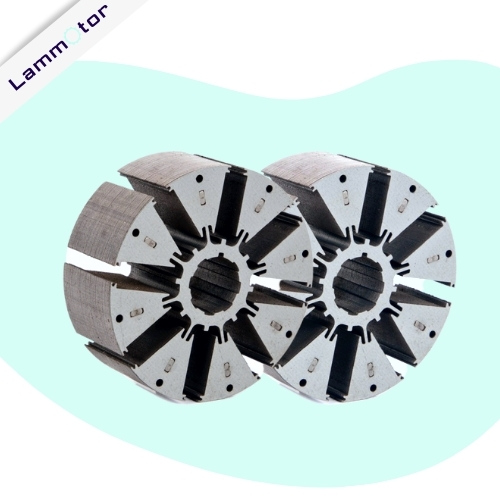
Lammotor makes axial flux stator laminations in China for disc (axial flux) motors: spiral-wound silicon steel cores, segmented stator laminations and SMC cores, with winding if needed. Axial flux motors are becoming a clear trend in EVs, drones and robotics, and we build stators to your drawing from a single prototype, with samples typically ready in 10 to 15 days.
Spiral-wound axial flux stators need special equipment that is rare on the market. We developed our own custom slot-punching and winding machines over many years, and we also build the stamping dies and offer stator winding.

Custom Axial Flux Stator Laminations
In an axial flux motor, the magnetic flux travels parallel to the shaft, between a disc-shaped stator and one or two disc rotors. This gives a short, flat motor with high torque density.
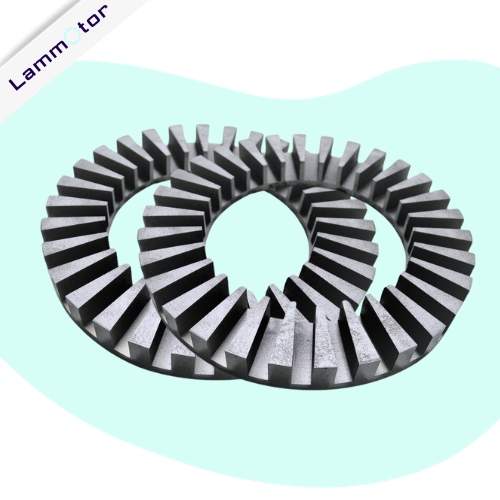
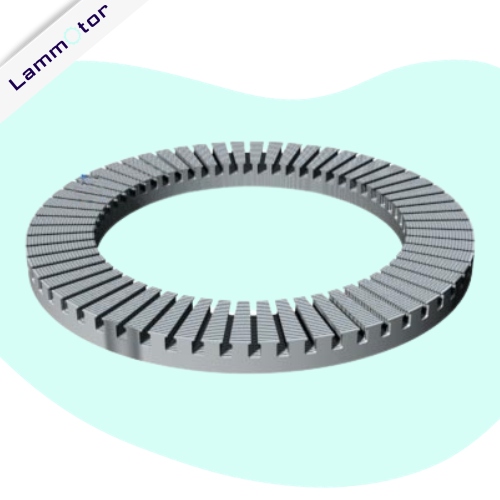
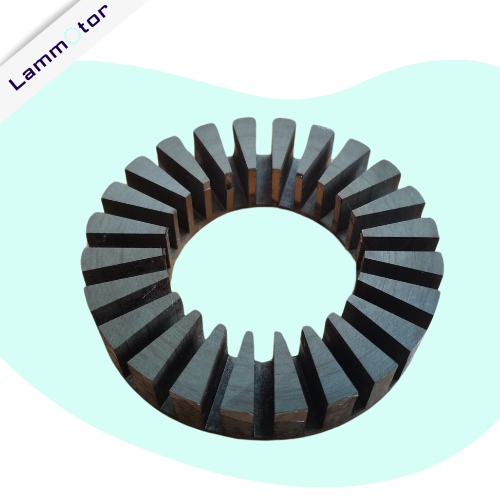
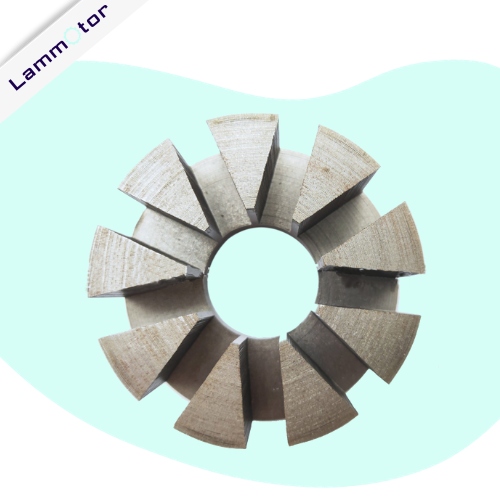
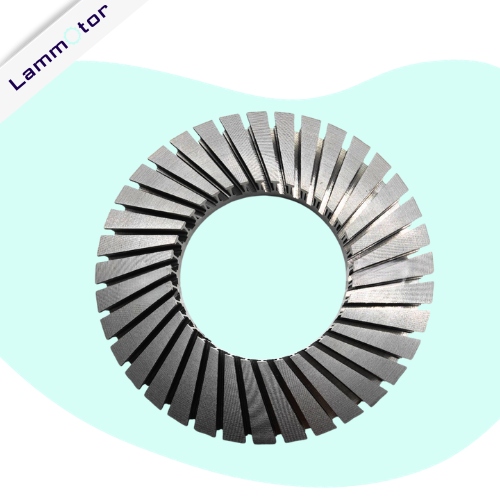
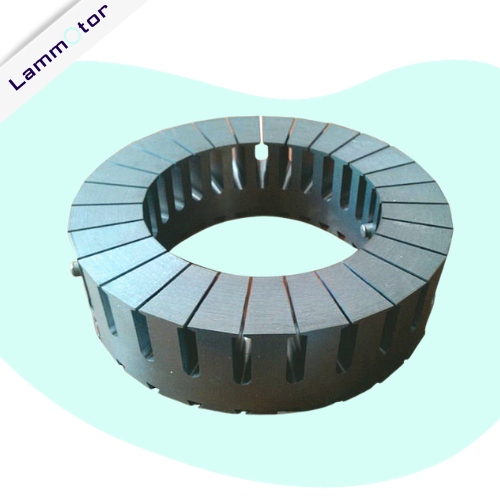
The stator core can be made in three ways: spiral-wound from a slotted steel strip, stacked from segmented tooth laminations, or pressed from soft magnetic composite (SMC). We also make amorphous axial flux stator samples.
The applications of axial flux stator laminations span a wide range of electric motor systems, including but not limited to electric vehicles, renewable energy generators, industrial machinery, and robotics.
We can custom such stators for elevator traction Motors, direct drive appliance motors, EV motor applications, etc.
Materials for Axial Flux Stator Cores
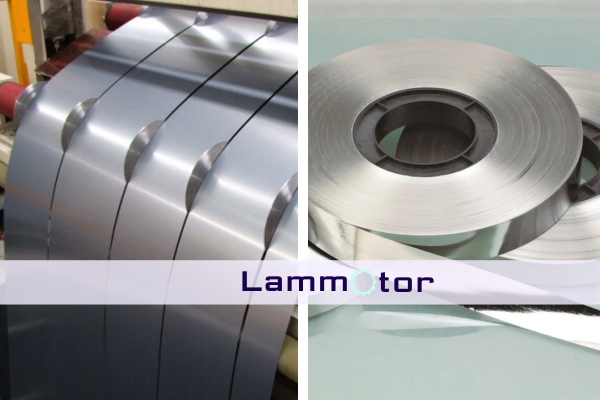
Axial flux stators are made from silicon steel sheet, amorphous alloy or soft magnetic composite (SMC).
Silicon steel sheet, known for its excellent magnetic properties, is often utilized for its high permeability and low core loss, making it ideal for efficiently channeling magnetic flux within the stator.
Amorphous alloy has much lower core loss at high frequency than silicon steel, but it is thin, brittle and expensive, and its saturation flux density is lower. We make amorphous axial flux stators as samples.
SMC (soft magnetic composite) is iron powder pressed into shape in our own tooling. It carries flux in three dimensions, so it suits the tooth shapes of axial flux motors; we work with Somaloy 1P, 3P and 5P. See our motor lamination materials.
OUR SERVICES
Manufacturing Processes for Axial Flux Stator Cores
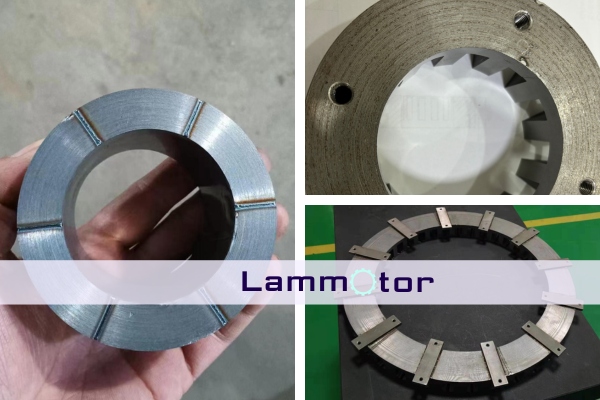
Spiral-wound cores: a strip of electrical steel is slot-punched with a special die and wound into a ring at the same time. Servo synchronization controls the punching frequency and the winding speed, so the slots line up from the inner to the outer diameter.
Segmented cores: each tooth is stacked from laminations that all have different widths, with chamfered edges where required, so the stack forms a trapezoidal tooth. SMC cores are pressed in our own tooling. We have developed these processes over many years and offer a one-stop service: slot punching, core winding, drilling, bonding, welding, heat treatment and coil winding.
Axial Flux Stator Coil Winding
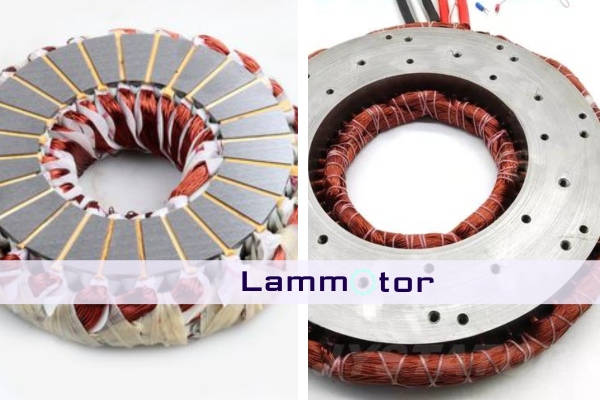
Axial flux stators usually use concentrated coils wound around each tooth, either directly on the core or on bobbins for segmented teeth.
Prototypes are wound by hand, and volume orders run on winding equipment set up for your stator.
Electrical tests after winding include resistance, number of turns, high voltage and insulation resistance.
OUR SERVICES
Quality Control for Axial Flux Stator Cores
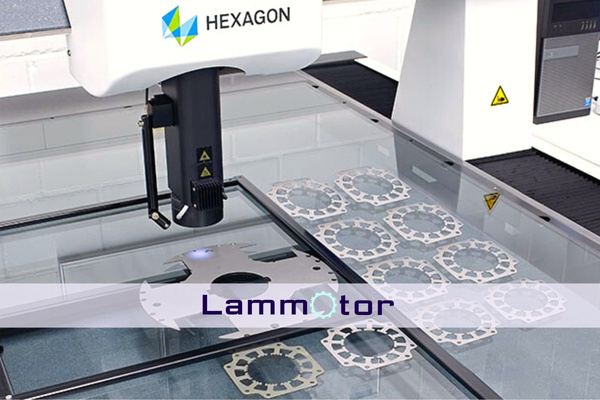
Each axial flux stator is checked from the raw material to the finished core.
Incoming electrical steel is tested for core loss, and the inner diameter, outer diameter, slot position and flatness of the core are measured on a CMM.
Wound stators are tested for resistance, high voltage and insulation resistance.
Every order ships with an inspection report.
Other Laminations We Make

Axial Flux Stator Lamination FAQs
It is the stator core of an axial flux (disc) motor, where the flux runs parallel to the shaft between the stator and one or two disc rotors. The core carries the windings and is made as a spiral-wound silicon steel core, from segmented laminations or from SMC.
Spiral-wound silicon steel cores suit one-piece stators with low loss in volume. Segmented cores, stacked from laminations of different widths, suit yokeless designs with separate teeth. SMC suits complex three-dimensional tooth shapes.
No. We can make a single axial flux stator as a prototype, in silicon steel, SMC or amorphous alloy.
Axial flux stator samples are typically ready in 10 to 15 days. New SMC tooling or winding may take longer.
A strip of electrical steel is punched with slots and wound into a ring on our custom machine, with punching and winding synchronized by servo control so the slots line up from the inner to the outer diameter. The core is then bonded or welded.
Each tooth segment is stacked from laminations that all have different widths, and the edges are chamfered as required, so the stack forms the trapezoidal tooth shape of the axial flux stator.
A DXF, STEP or PDF drawing with the inner and outer diameter, number of slots, core height, material, winding data and quantity.
Yes. Axial flux designs are often confidential, and most of our customers sign an NDA with us before sharing drawings.
Get a Quote for Axial Flux Stator Laminations
Send us your drawing with the inner and outer diameter, number of slots, material (silicon steel, SMC or amorphous), process and quantity, and tell us if you need winding. We will reply with a quote.